
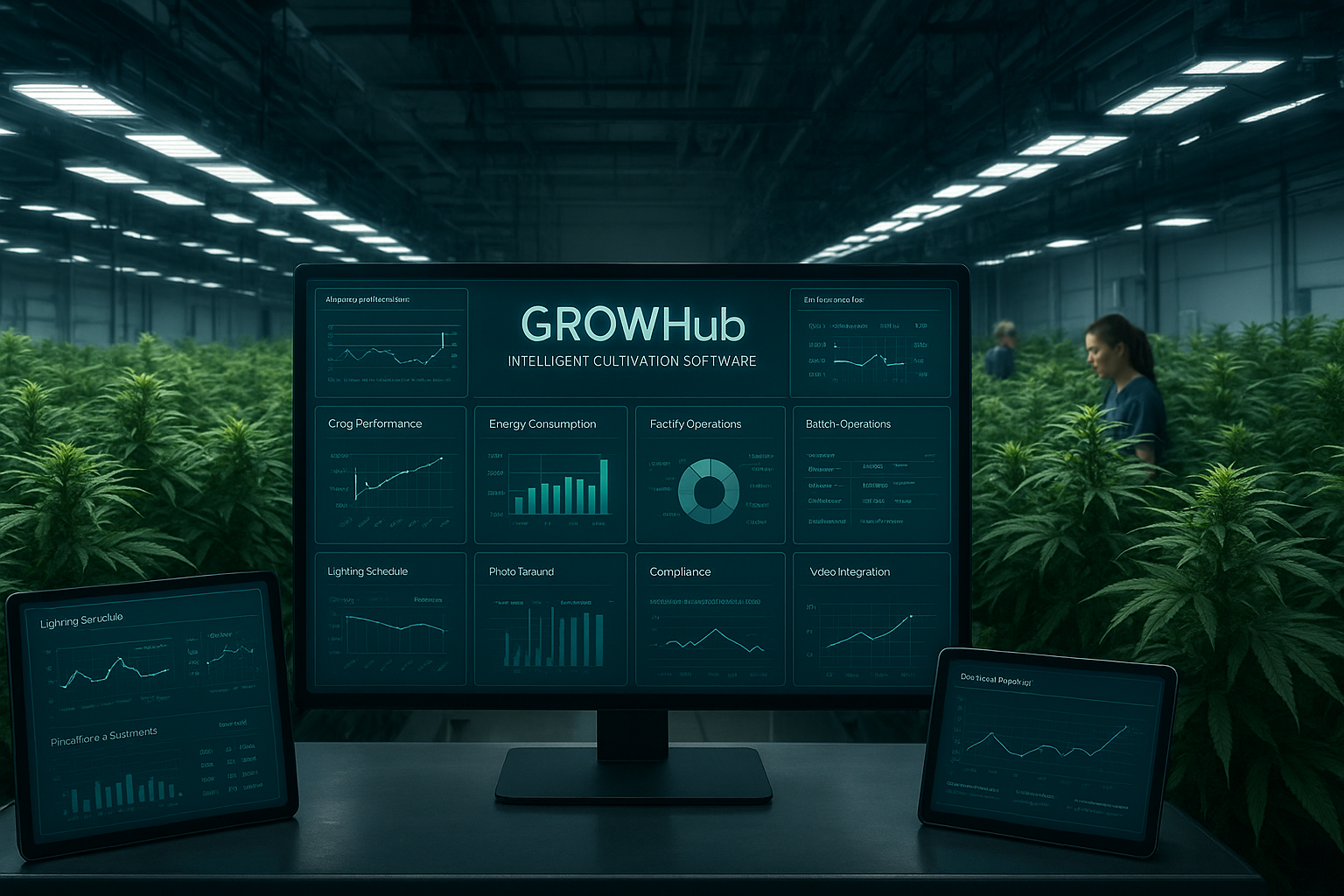
TSRgrow has rolled out a significant expansion of its GROWHub Intelligent Cultivation Software platform for 2026, adding tools that pull together crop performance, energy consumption, facility operations and compliance records into a single connected system. For commercial cultivators still stitching together separate spreadsheets, control panels and compliance logs, that consolidation addresses a real operational headache - one that only gets worse as facilities scale.
The expanded platform builds on GROWHub's existing role as the software layer behind TSRgrow's LED lighting and Remote Power infrastructure, now adding advanced analytics, expanded data collection, energy monitoring, batch-record functionality, Metrc integration and Building Management System connectivity. That last piece matters more than it might sound: track-and-trace compliance has traditionally lived apart from cultivation data, forcing operators to reconcile grow-room reality with regulatory paperwork after the fact. Multi-state operators juggling different state systems know this problem well, and it echoes a broader industry shift toward integrated compliance tools, similar in spirit to platforms like seed to sale software virginia that link point-of-sale and inventory data directly to state reporting requirements.
Why disconnected systems create real business risk
Here's the catch with cultivation data scattered across platforms: it's not just inconvenient, it's a compliance liability. When lighting schedules, environmental logs and batch records live in different tools, reconstructing an accurate history for an audit or a Metrc discrepancy becomes a manual, error-prone exercise. Regulators expect traceability from clone to sale, and gaps in documentation - even innocent ones caused by fragmented recordkeeping - can trigger scrutiny that costs operators time and money they'd rather spend on production.
GROWHub's expanded batch-record capabilities aim to close that gap by organizing cultivation conditions, settings and operational data around individual crop cycles, then feeding that information into Metrc workflows. In practice, that means less time spent manually transcribing grow logs into compliance software, and a cleaner audit trail if regulators come asking. As the industry braces for tighter oversight and the possibility of federal rescheduling changing reporting expectations, that kind of traceability is becoming less of a convenience and more of a baseline requirement.
Energy monitoring meets cultivation strategy
Energy costs are a persistent line item for indoor cultivators, and GROWHub's direct connection to TSRgrow's Remote Power infrastructure lets growers evaluate lighting energy use alongside cultivation and environmental data rather than as a separate utility bill to puzzle over later. That pairing lets operators see, cycle over cycle, how a given lighting recipe or photoperiod adjustment affects both yield and the power bill - information that's hard to act on when energy data sits in a utility portal and grow data sits somewhere else entirely.
Expanded BMS connectivity extends that logic to the rest of the facility, letting GROWHub exchange information with broader building systems instead of operating as an island. For operators managing HVAC, dehumidification and lighting as interdependent systems - which, in a commercial grow, they always are - that connectivity reduces the operational friction of managing critical data across multiple independent platforms.
What this signals for cultivation operators
To put it plainly, GROWHub's evolution from lighting-control software into a fuller cultivation intelligence platform reflects where the commercial cannabis sector is heading generally: toward systems that treat compliance, energy management and production data as one continuous record rather than three separate chores. That's not a small shift. Operators who can document a crop cycle cleanly, from environmental conditions to Metrc reporting, are better positioned for audits, wholesale buyer due diligence and the kind of operational consistency that investors and lenders increasingly ask about.
Whether this reduces labor costs or measurably improves yields at scale remains something individual operators will need to test in their own facilities. But the direction is clear enough: cultivation software that treats compliance as an afterthought is becoming harder to justify.