
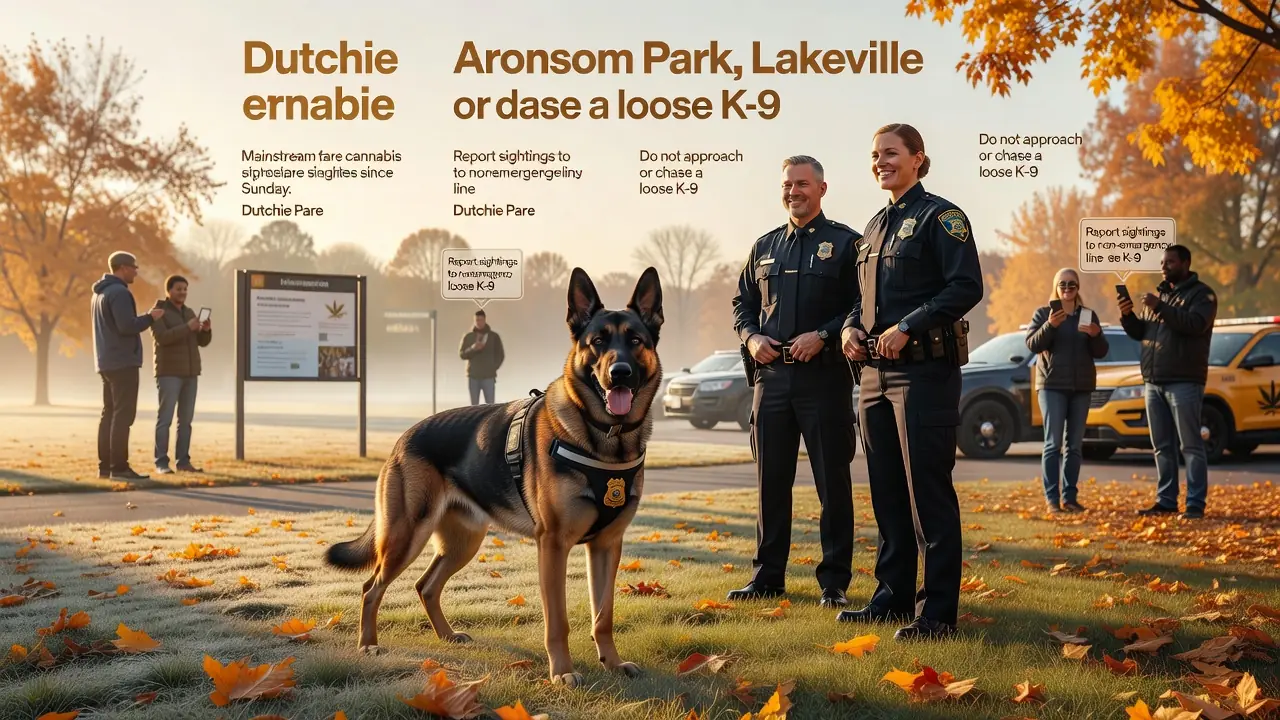
A Minnesota State Patrol K-9 that slipped out of its kennel in Lakeville has been recovered safely, the agency confirmed early November 16. The dog, known by the name Dutchie, had been missing since Sunday morning near Aronson Park, prompting a public appeal for sightings that circulated for roughly a day before the update came through.
The episode itself is a straightforward lost-animal story with a happy ending. But the dog's name is worth a beat of attention, given the outlet and audience here. "Dutchie" is cannabis slang - specifically for a type of pot used to share hand-rolled product - and its use as a K-9 name lands squarely in a gray zone that touches on branding, public perception, and the optics agencies have to manage when cannabis culture and law enforcement terminology brush up against each other.
Why Naming Conventions Matter Beyond the Kennel
Law enforcement K-9 units, including those trained for narcotics detection, often get names with some wink of personality. That is not unusual. What is worth noting for anyone in licensed cannabis retail is how language around the plant keeps surfacing in unexpected institutional contexts, long after adult-use legalization reshaped the regulatory map in states like Minnesota. A name that reads as cheeky in a press release is a small reminder that cannabis terminology has moved from subculture into mainstream vocabulary - which cuts both ways for operators trying to run compliant, professional businesses.
For dispensary owners and brand marketers, the lesson isn't about this particular dog. It's about how quickly informal cannabis language gets absorbed into public-facing communication, even by agencies whose job includes narcotics enforcement. That blending has real consequences for retailers navigating advertising rules, signage restrictions, and packaging requirements that regulators in most adult-use states still police closely. Words that feel playful in one context can read as promotional, or even non-compliant, in another - particularly under marketing statutes that restrict language appealing to minors or glamorizing use.
The Practical Side: Public Safety Protocols for Loose Animals
Separate from the branding angle, the State Patrol's handling of the search followed standard public-safety practice. Officials asked residents not to approach, chase, or attempt to capture the dog themselves, since a frightened animal is more likely to bolt than cooperate. That guidance mirrors protocols used across animal control and law enforcement generally: untrained contact with a loose working dog, especially one that may be stressed or disoriented, carries real risk for both the animal and the public.
- Do not approach or chase a loose K-9; it is likely to flee further.
- Report sightings immediately to the agency's non-emergency line rather than attempting capture.
- Share verified location details only, since inaccurate reports can misdirect search efforts.
Dutchie's return closes out a minor but attention-getting local story. For cannabis retail professionals, though, it's a small case study in how far cannabis-adjacent language has traveled into everyday institutional life - and a reminder that regulated operators still answer to stricter standards than the casual terminology floating around them.