
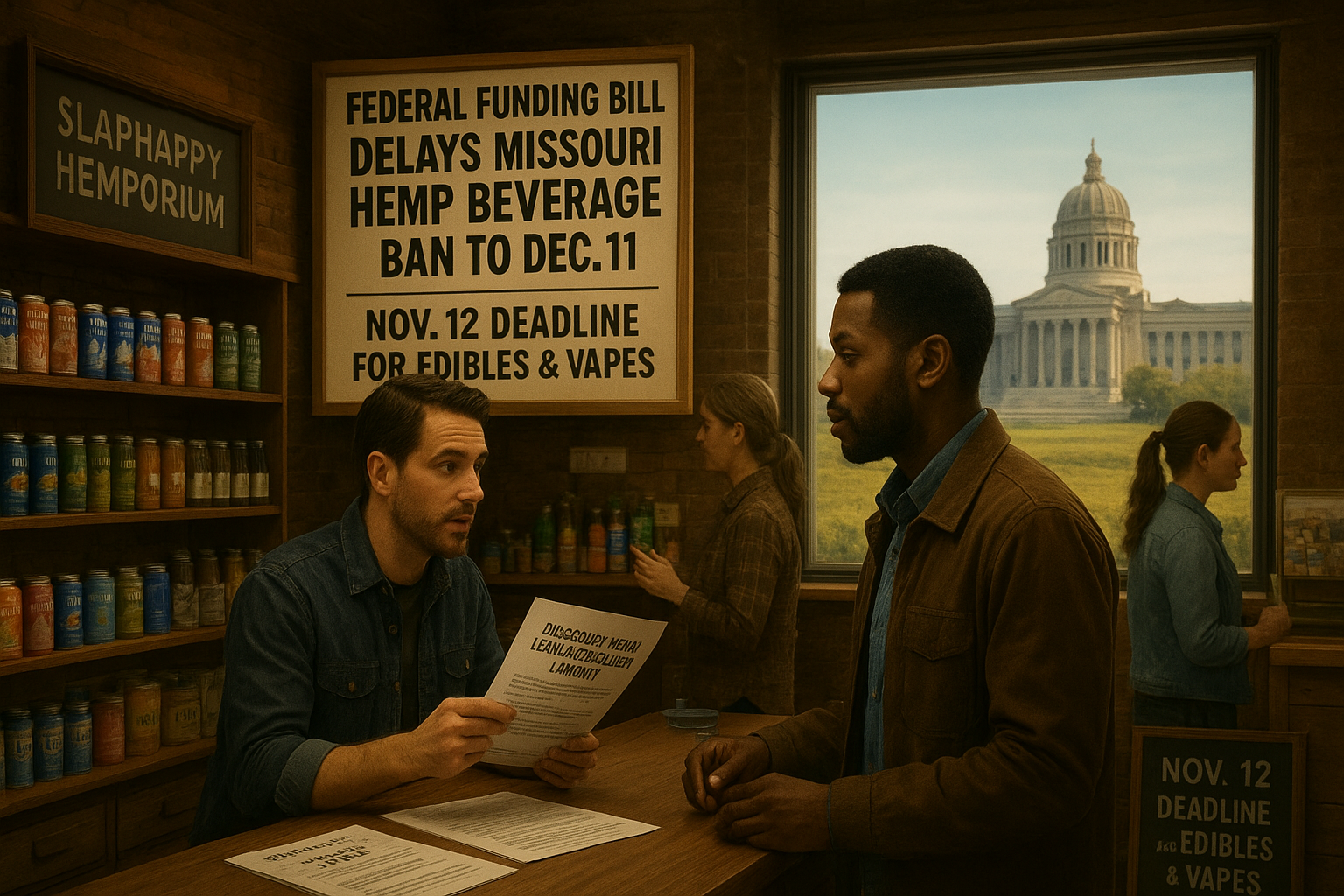
Missouri retailers selling hemp-derived THC beverages got a reprieve of sorts this week, though it's a conditional one. A short-term federal funding measure that cleared the U.S. Senate over the weekend would push back the federal ban on intoxicating hemp products until Dec. 11, and Missouri's own law contains a carve-out that ties the state's fate to whatever Congress does. If the House and the president sign off, beverages could stay on shelves past Nov. 12, even as most other intoxicating hemp products in the state go dark that day.
Here's the mechanism worth understanding: Gov. Mike Kehoe signed legislation this spring aligning Missouri with the federal hemp ban Congress passed last year, with an effective date of Nov. 12. But lawmakers built in an exception. If Congress delays the federal ban, Missouri's own prohibition softens slightly, sparing intoxicating beverages while everything else - edibles, tinctures, vape products - still goes off the market as scheduled. That's an unusual regulatory structure, one where state policy pivots entirely on federal timing rather than on any independent judgment about product risk. For operators trying to manage compliant packaging, batch testing, and wholesale menus across state lines, that kind of dependency is its own operational headache, not unlike the challenges multi-state operators face when adapting inventory systems and a cannabis retail platform for Rhode Island to differing state rules on potency limits and labeling. cannabis retail platform for Rhode Island
Jay Patel of the Missouri Hemp Trade Association called the Senate's 61-31 vote a "good sign," and it's hard to argue otherwise from an industry standpoint. But he was careful to note that federal action, even if it holds, doesn't resolve Missouri's underlying legal fight. The association and a coalition of hemp businesses have already sued in federal court, arguing the state's definitions of hemp and marijuana are unconstitutionally vague - a claim that, if it gains traction, could reshape enforcement regardless of what happens in Washington.
What Retailers Are Actually Facing
For operators like John Grady, who runs Slaphappy Hemporium with his wife Kara in Rosebud, the practical picture is split. Their THC seltzers likely survive into December if the funding bill becomes law. Their edibles line does not, no matter what Congress does, because Missouri's carve-out only protects beverages. Grady's customers have already started stocking up on products they know are going away. That's a familiar pattern in regulated retail when a sunset date is public knowledge - inventory clears out fast, and then it doesn't come back.
The mismatch between beverage and non-beverage treatment creates a genuine SKU management problem. Retailers now have to sort their entire hemp catalog into two buckets - protected and unprotected - and plan cash flow, wholesale orders, and delivery manifests accordingly. That's not a small lift for a small business already dealing with 280E tax exposure and inconsistent banking access.
Why the December Deadline Matters More Than It Looks
Dec. 11 isn't just a new expiration date; it's a window. Hemp trade groups are using the extension to push for federal regulations that would set clearer testing standards, labeling requirements, and potency thresholds nationally, rather than leaving each state to draw its own lines - often inconsistently - around what counts as intoxicating hemp versus marijuana. Whether Congress delivers that kind of framework in four months is an open question. What's clear is that Missouri retailers, and the compliance teams supporting them, are operating under a deadline that could move again, or not move at all.