
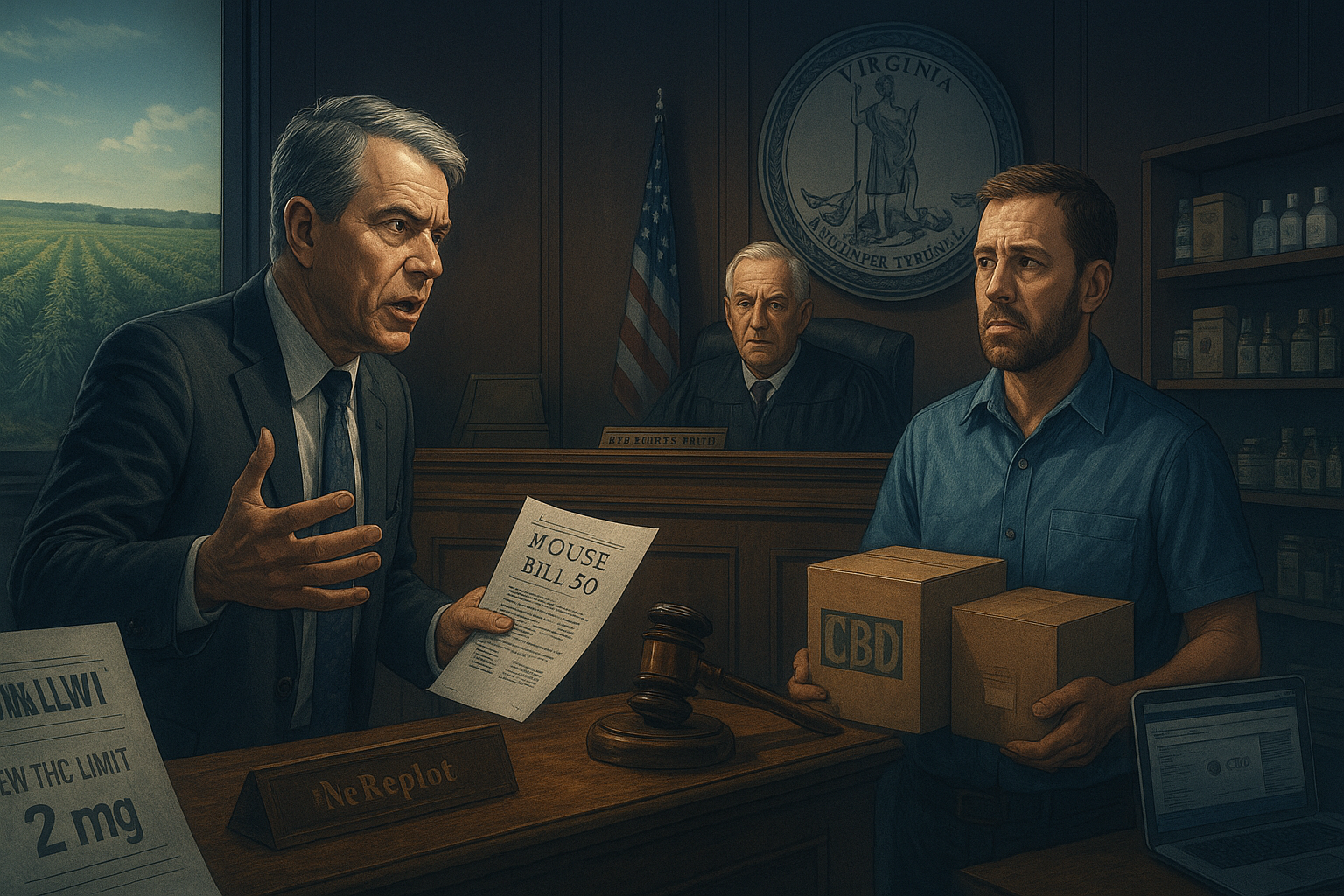
A federal judge in Virginia spent nearly five hours Wednesday weighing whether to pause a set of hemp restrictions that were tucked into the state's budget bill, with store owners testifying that the changes could gut their inventory and shut down operations built over years of compliance work. U.S. District Judge Robert S. Ballou did not rule from the bench, but the businesses pressing for a temporary injunction say time is short: the new rules take effect Aug. 15, and there's no grace period built in for products that were legal one day and not the next.
The dispute centers on House Bill 30, which strips out the 25-to-1 CBD-to-THC exception that many Virginia retailers had built their product lines around and replaces it with a flat two-milligram total-THC-per-package cap. That's a significant tightening, and it lands on operators who had little runway to adjust wholesale menus, relabel packaging, or pull noncompliant batches from shelves. For comparison, states further along in regulating intoxicating hemp and adult-use cannabis have generally phased in potency limits with longer transition windows and clearer guidance from regulators - the kind of operational scaffolding that lets a compliance team actually plan, whether that means adjusting SKU management or migrating to systems like Ohio seed-to-sale dispensary software to track product reclassification in real time. Virginia's approach, by contrast, has left store owners guessing at how to handle inventory that flips from legal hemp to something resembling an illicit cannabis product overnight.
Why the Timeline Matters for Compliance
Attorney Chap Petersen, who represents the seven plaintiff businesses, argues the compressed timeline is itself a due-process problem. The governor didn't sign the bill until June 29, leaving businesses roughly six weeks to unwind product lines tied to agricultural cycles that don't bend to legislative calendars. Hemp crops planted in April for an October harvest can't simply be redirected once they're in the ground. That's a supply chain reality state lawmakers apparently didn't weigh heavily enough, according to Petersen, who also criticized what he called "radio silence" from Virginia's cannabis regulatory agency - no policy guidance, no town halls, nothing resembling the kind of regulatory bulletin operators typically rely on before a compliance deadline like this one.
The Inventory Problem Nobody Wants
For retailers like Cody Moorefield of Simply Hemp in Collinsville, the practical question is blunt: what happens to a shelf full of product that was compliant at midnight and isn't by morning? Under the new definition, packages exceeding the two-milligram threshold no longer qualify as hemp under state law, which raises the specter of criminal exposure for simply holding onto inventory that was purchased and stocked in good faith. That's the kind of regulatory whiplash that makes inventory management and lab-verified certificates of analysis look less like paperwork and more like legal insurance.
What an Injunction Would - and Wouldn't - Solve
Petersen has been careful to frame the injunction request narrowly. The businesses aren't asking Ballou to strike down HB 30 outright; they want breathing room to sell existing stock and lobby the General Assembly for a fix while a broader constitutional challenge, including a potential takings claim, moves toward trial. If the injunction is denied, the restrictions take effect Saturday as scheduled, and the underlying lawsuit continues regardless. Either outcome leaves multi-product retailers and Virginia-based manufacturers navigating a market where compliant formulation, not marketing, will decide who survives.