
Running a coffee shop means managing a rush that starts before sunrise and rarely lets up until close. The point-of-sale system sitting at the counter does more than ring up drinks - it tracks inventory, manages staff hours, and increasingly decides whether a customer comes back tomorrow. Choosing the wrong one can mean slower lines, stockouts on popular items, and clunky reporting that leaves owners guessing about what's actually selling.
What a Coffee Shop Actually Needs From a POS
The daily mechanics of a café are different from a sit-down restaurant, and that distinction matters more than vendors sometimes admit. Order volume is high, tickets are small, and customization - oat milk, extra shot, syrup pumps - happens constantly. A system built for table service may offer more than a counter-service shop needs, while a bare-bones retail terminal might lack the ingredient-level inventory tracking that keeps espresso beans and alternative milks in stock. Fair enough: there's no single right answer, just a right fit for a given shop's size, menu complexity, and budget.
Comparing the Leading Platforms
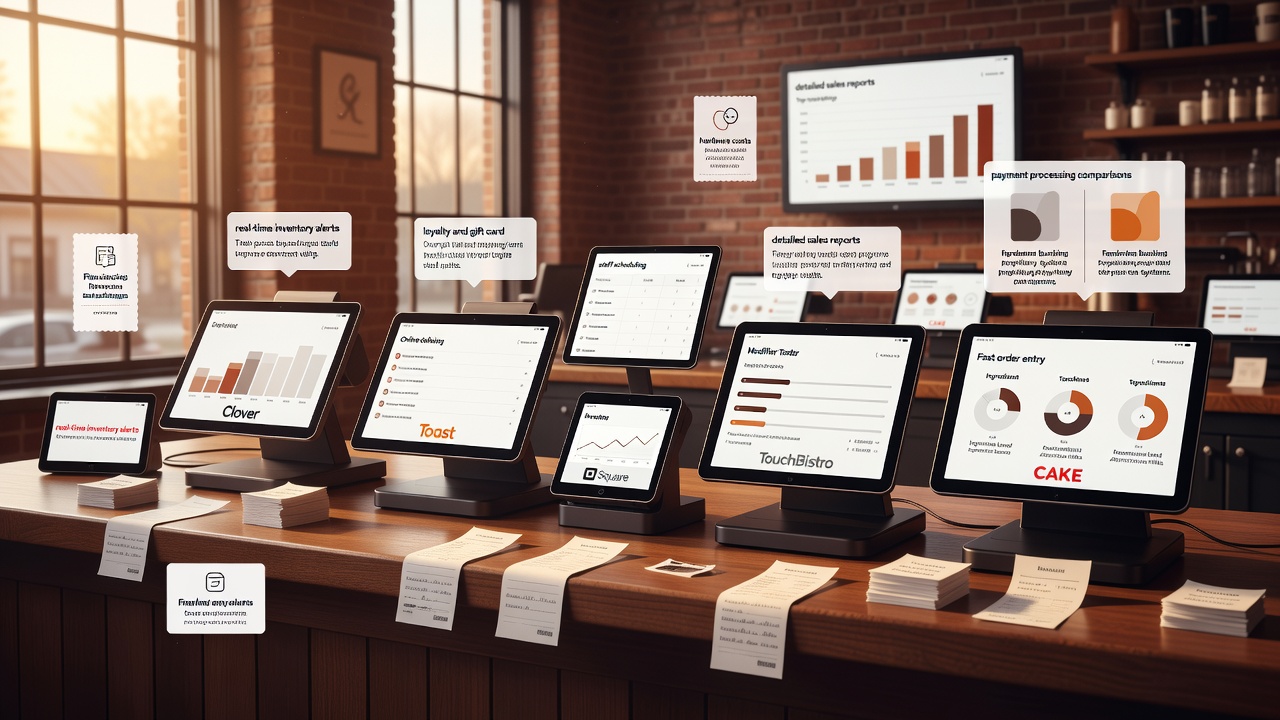
Clover functions as an all-in-one option, bundling software, hardware, and payment processing into one package, with built-in loyalty programs and financing tools like Clover Capital that extend credit against future sales. The catch is that Clover requires its proprietary hardware and, for direct purchases, its own payment processing - a trade-off that limits price shopping on transaction rates. Toast leans into online and third-party delivery integration, useful for shops juggling in-house and off-premise orders, though its restaurant-first design can feel heavier than a simple café setup requires.
Square remains the accessible entry point, with free software and hardware starting around $49, making it a reasonable starting line for a new or small-volume shop. Its inventory tools are comparatively basic, though, so a shop with a sprawling menu may outgrow it. TouchBistro, running on iPad hardware, allows third-party payment processors - a real advantage for owners who want to negotiate their own rates - and offers strong modifier tools for drink customization. CAKE rounds out the field with fast order entry and ingredient-level inventory tracking, though pricing requires a custom quote and integrations are narrower than some competitors offer.
What Owners Should Weigh Before Signing a Contract
Here's the practical question underneath all of this: does the system lock you into one payment processor, and does that matter for your margins? Systems bundling hardware and processing - Clover and Toast among them - trade flexibility for convenience. Platforms allowing outside processors, like TouchBistro and, to a degree, CAKE, give owners more room to shop for better rates, but that flexibility usually comes with more setup work.
- Ingredient-level inventory tracking to prevent stockouts on high-turnover items
- Payment processing flexibility versus bundled, proprietary systems
- Loyalty and gift card features that support repeat visits
- Hardware costs and compatibility with existing equipment
- Reporting depth for tracking top-selling drinks and food items
In practice, though, the decision usually comes down to volume and ambition. A single-location café with a simple menu may do fine with Square's free tier. A multi-terminal operation juggling delivery apps, loyalty points, and staff scheduling will likely find more value in Clover or Toast, even at a higher upfront cost. There's no shortcut here - just a clear-eyed look at what the shop actually does every morning.