
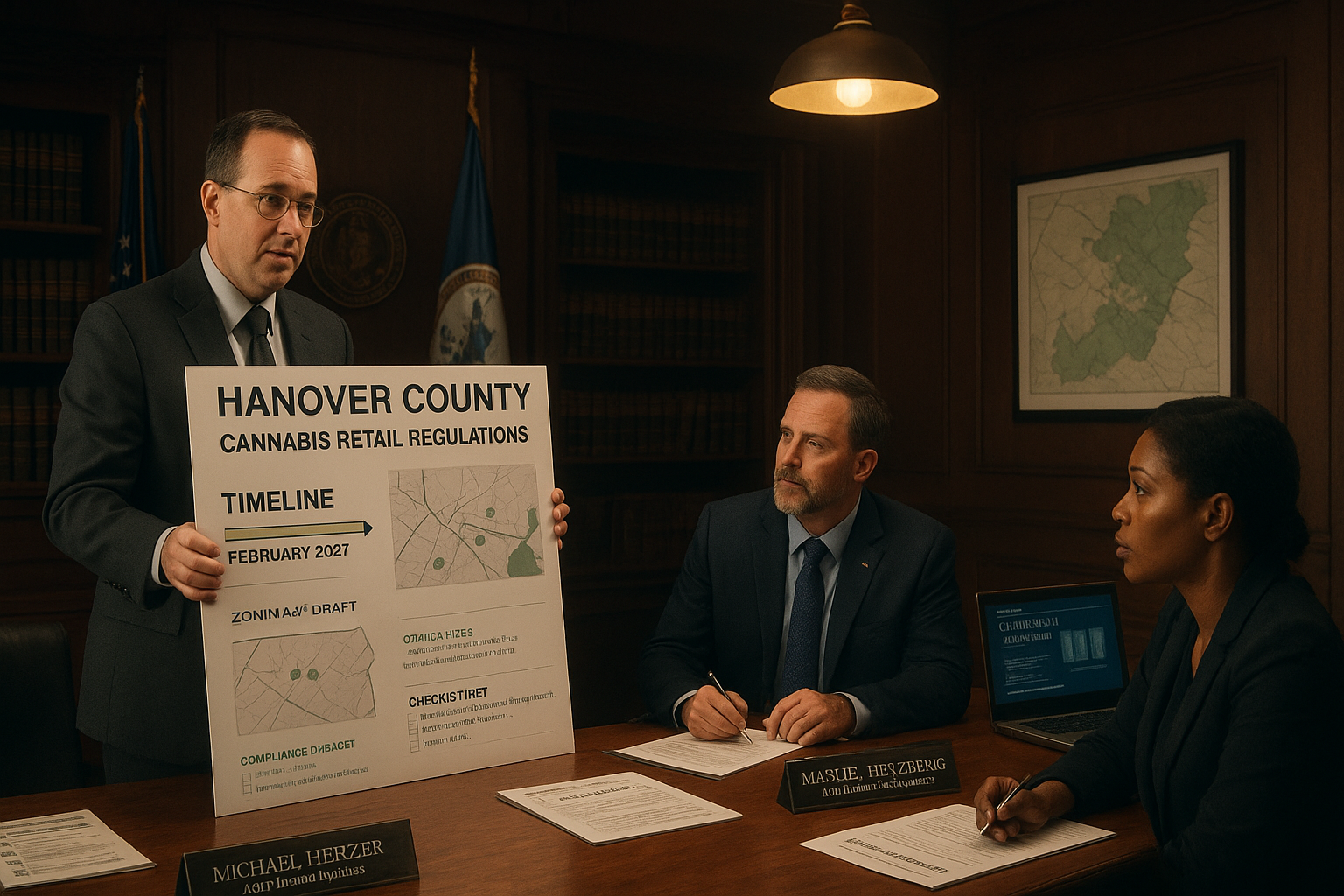
Virginia's retail cannabis market won't open for business until July 1, 2027, but Hanover County isn't waiting around. County supervisors this week directed staff to begin drafting local ordinances covering marijuana retail sales, a preemptive move designed to give the board real leverage before license applications start arriving. The timeline is tight but deliberate: officials want zoning and related rules in place by February 2027, five months ahead of the state's launch date.
That distinction between state and local authority matters more than it might seem at first glance. Virginia's Cannabis Control Authority will handle license issuance for storefronts, cultivators, processors, testing facilities and distributors - the core plumbing of the supply chain. But localities retain control over zoning, retail sales tax structure, hours of operation, and even criminal penalties for possession in certain settings. For operators building out a store, that means the back-end systems - inventory tracking, compliance logging, point-of-sale infrastructure - will need to flex to accommodate rules that vary county by county, not just state to state. Operators who've already stood up a compliant cannabis POS in Colorado know how quickly local tax rates and reporting quirks can complicate what looks like a simple sale on paper. compliant cannabis POS in Colorado
County Attorney Dennis Walter, who presented to the board Wednesday, framed the ordinance work as a way to give Hanover a seat at the table when retail applicants come knocking. Under the Cannabis Control Authority's current provisions, the board can decline to issue a license if an applicant is judged detrimental to public morals, safety or welfare - a standard vague enough to invite local input. The authority is also required to weigh objections from local governing bodies, health and safety considerations, and proximity to schools, hospitals or childcare centers. In practice, that gives counties like Hanover indirect but meaningful influence over where - and whether - a dispensary ends up on Main Street.
Zoning as the First Line of Compliance
Walter pointed to last summer's zoning overhaul restricting new smoke and vape shops as a model for how the county might approach retail cannabis. That's not a coincidence. Zoning is often the bluntest and most durable tool a locality has, since it shapes the market long before a single product batch reaches a shelf. For prospective operators, this means site selection and lease negotiations should start well before license applications are filed - a delay in local zoning approval can stall a build-out regardless of state licensing status.
A Law Localities Didn't Choose, But Must Administer
Not every supervisor was enthusiastic. Cold Harbor Supervisor Michael Herzberg noted, accurately, that this framework wasn't crafted or approved by the county - it arrived via the General Assembly's budget process, layered onto a possession law that's been in effect since 2021. "We have to follow the law," he said, a fair enough summary of the position many localities across Virginia will find themselves in as the marketplace approaches. Staff now have two to three months to produce draft zoning language, with public safety and community development departments expected to weigh in before anything reaches the board for a vote.