
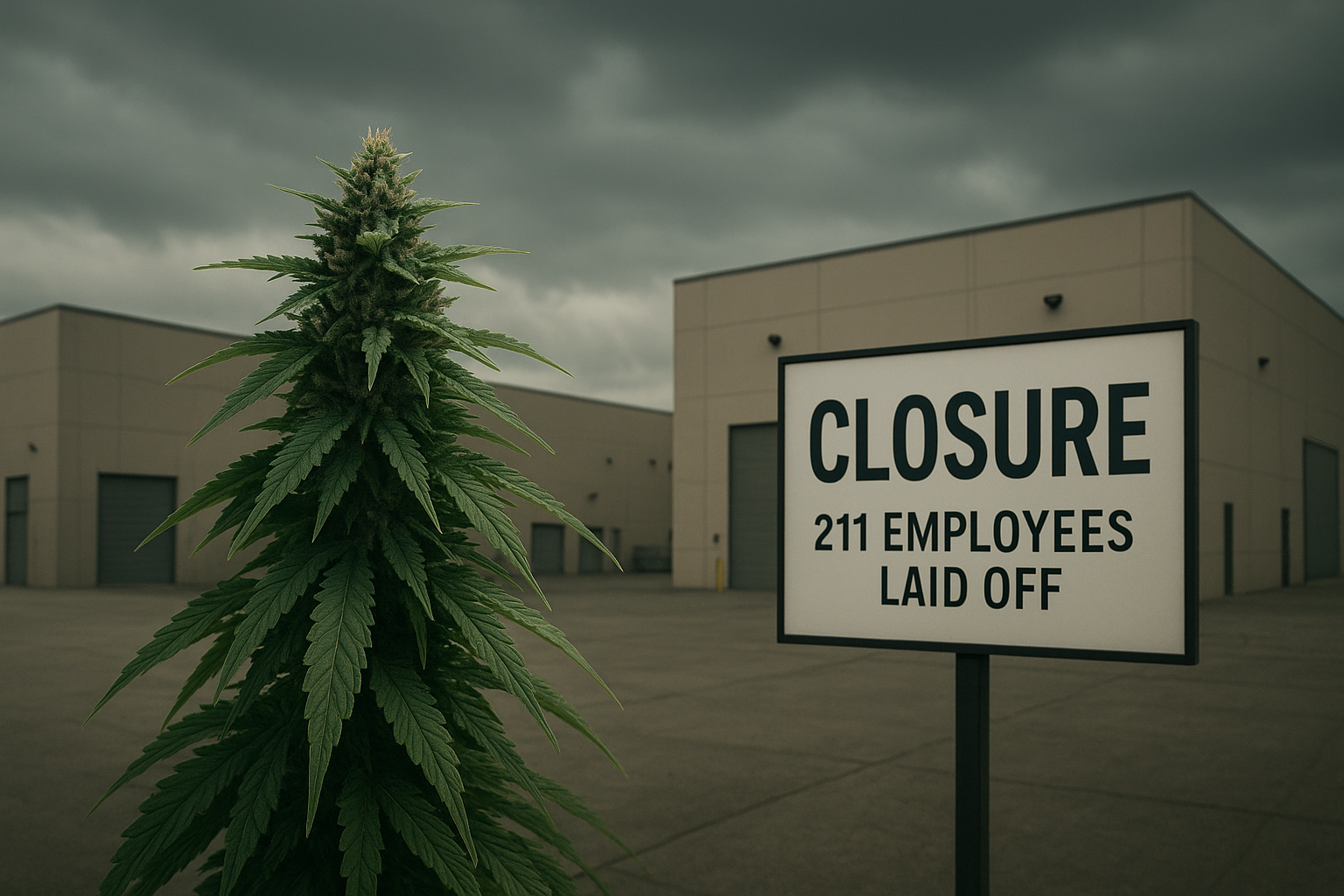
Parallel Florida LLC, the parent company behind Surterra Wellness and its 44 dispensaries statewide, has permanently closed two cultivation and processing facilities in the Tampa Bay area, eliminating 211 jobs. The company filed its WARN notice with the Florida Department of Commerce on July 21, covering layoffs that began July 6 at sites in Wimauma and Lakeland. Neither facility will reopen, according to Robin DeBaise, Parallel's head of people and culture, who confirmed the closures in the filing.
The math here is not small. Between the two properties, Parallel is walking away from more than 330,000 square feet of greenhouse cultivation space that once anchored its vertical integration strategy in one of the country's largest limited-license medical markets. Production technicians, cultivation technicians, and support staff make up the bulk of the affected workforce - 157 at Wimauma, 54 at Lakeland - and none were unionized, so there's no collective bargaining process cushioning the transition. For operators elsewhere trying to keep grow operations lean without sacrificing throughput, the episode is a reminder that back-of-house efficiency, from harvest scheduling to inventory logging, matters just as much as storefront execution; retailers in other regulated markets have leaned on tools like POS software for Maine cannabis retailers to keep that kind of operational discipline tight from seed to sale.
How Parallel Got Here
This didn't happen overnight. Parallel's trouble traces back years, through a failed $1.9 billion SPAC merger with Ceres Acquisition Corp. that collapsed in 2021 amid investor doubts about the company's financial projections, a scuttled $100 million Windy City Cannabis acquisition in Illinois, and Beau Wrigley's resignation as CEO later that same year. Add a securities fraud lawsuit from investors - allowed to proceed by a federal judge in 2023 and reportedly settled in 2026 - plus an exit from Pennsylvania's medical market over unpaid rent, and a pattern emerges: aggressive multistate expansion funded heavily by one investor's capital, followed by a slow unwind once that capital and confidence dried up.
The real estate angle deepens the story. Both Florida facilities were sold to Innovative Industrial Properties, a cannabis-focused REIT, in sale-leaseback deals - Wimauma for $35.3 million in 2020, Lakeland for $19.6 million later that year, with IIP also funding tens of millions in tenant improvements and expansion capital. Sale-leaseback financing was, for a stretch, the preferred way for cash-strapped multistate operators to unlock capital without diluting equity. But it also means these companies don't own the dirt under their greenhouses; when operations wind down, the landlord is left holding vacant industrial space in a market that's gotten more crowded with cultivation square footage than patient demand can always absorb.
What It Means for the Florida Market
Florida's medical cannabis program has grown to more than 937,000 registered patients, up from roughly 410,000 when Parallel and IIP struck their first deal in 2020. That growth might suggest plenty of room for cultivators, but scale alone doesn't guarantee margin. Wholesale pricing pressure, the fixed costs of maintaining vertically integrated grow-to-dispensary operations, and the tax burden under Section 280E - which denies standard business deductions to plant-touching companies - all squeeze operators regardless of patient counts. Parallel's restructuring, which began in 2023 with a foreclosure agreement covering assets in Florida, Massachusetts, Texas, and Nevada pledged as loan collateral, suggests debt service became unsustainable well before these closures were announced.
For other Florida operators, landlords, and wholesale buyers, the closures are worth watching closely. A cultivation footprint this large exiting the market could shift wholesale supply dynamics, at least temporarily, and other multistate operators may find opportunity in absorbing displaced demand - assuming their own balance sheets can handle it. Affected workers were given information on Florida's Rapid Response Program, a state resource meant to help with reemployment, but for an industry still maturing under shifting regulatory and financial pressure, a layoff of this size is a fair signal that not every expansion strategy built during cannabis's boom years was built to last.