
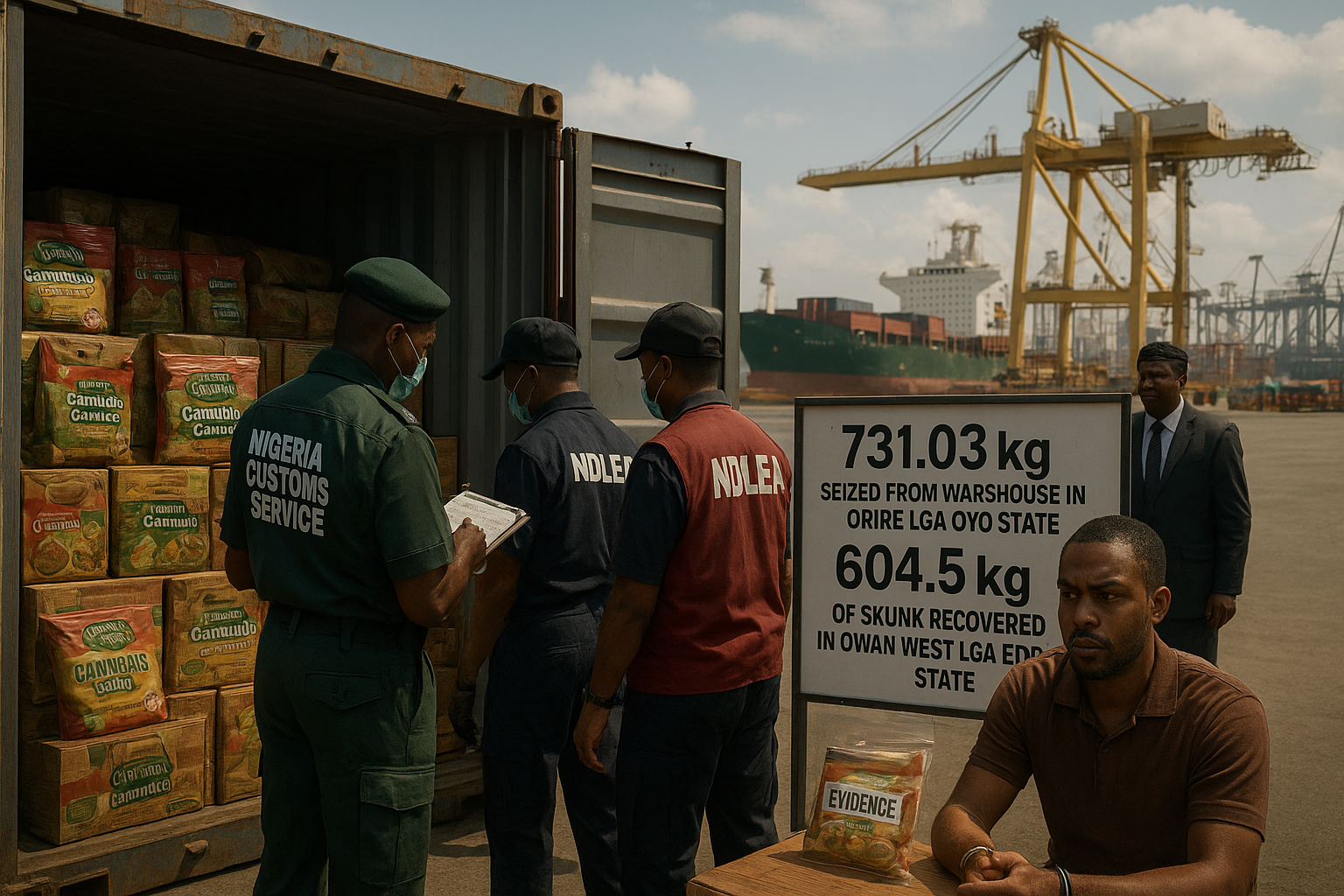
Nigerian drug enforcement officers intercepted 442 packets of cannabis-infused cookies and gummies, totaling 309.4 kilogrammes, hidden inside a 40-foot shipping container at the TinCan Island Port Complex in Lagos. The discovery, made on August 4 during a joint inspection with the Nigeria Customs Service and other security agencies, points to a persistent enforcement challenge: infused edibles are harder to detect than raw plant material, and they move through commercial shipping lanes designed for ordinary consumer goods.
For legal markets elsewhere, this kind of seizure is a reminder of why edible products carry such heavy compliance weight wherever cannabis retail is regulated. In jurisdictions with adult-use or medical programs, infused confections are subject to strict packaging, dosing, and lab testing requirements precisely because they resemble everyday snack food and can appeal to unintended consumers, including minors. Retailers in regulated markets track every unit from manufacture to sale using seed-to-sale systems and point-of-sale platforms - tools such as dispensary pos software that log batch numbers, COAs, and expiration data so a product's origin is never in question. Nigeria's case shows what happens in the absence of that infrastructure: product with no verifiable chain of custody, no lab testing disclosure, and no regulatory pathway simply enters through cargo manifests instead.
Why Edibles Draw Heightened Scrutiny
Cannabis-infused cookies and gummies present a distinct risk profile compared to flower or concentrate. Packaging that mimics mainstream snack brands has been a recurring concern for regulators in legal markets, prompting rules on plain, child-resistant packaging and mandatory potency labeling. Without those controls, as in this seizure, there is no way to confirm dosing accuracy or whether the product contains anything beyond cannabis extract. That is a consumer-safety problem as much as a legal one - undisclosed potency and unknown production conditions carry real risk, independent of any question about legality.
A Wider Enforcement Sweep
The port seizure was one of several actions the National Drug Law Enforcement Agency reported between August 3 and August 8. Operatives recovered 731.03 kilogrammes of illicit drugs from a warehouse in Oyo State, 604.5 kilogrammes of skunk in Edo State, and smaller quantities in Abia and Lagos, including an arrest tied to a three-month manhunt in Badagry. Suspect Larry Nnaji was arrested in connection with the TinCan Island find, while other operations produced arrests, at-large suspects, and continuing investigations.
- 442 packets of cannabis-infused edibles, 309.4kg, recovered at TinCan Island Port Complex
- 731.03kg of illicit drugs seized from a warehouse in Orire LGA, Oyo State
- 65 jumbo bags of skunk (604.5kg) recovered in Owan West LGA, Edo State
- Additional arrests and seizures reported in Abia and Lagos States
What It Signals for Regulated Operators
None of this touches licensed cannabis commerce directly, since Nigeria has no legal adult-use or medical retail framework. But it underscores a pattern regulators in legal markets watch closely: unregulated edible products traveling through ordinary freight and mail channels, often produced with no oversight of dosing, labeling, or ingredient sourcing. For operators in states with functioning cannabis programs, it is a useful contrast - every packaging rule, every lab test, and every point-of-sale compliance log exists specifically to prevent products like these from reaching consumers unchecked. Brig. Gen. Mohamed Buba Marwa, the agency's chairman, urged personnel to sustain enforcement momentum while continuing what he called a balanced approach - pairing seizures with broader efforts to address demand. That framing, balancing enforcement with public health measures, echoes debates playing out in legal markets too, where regulators weigh strict controls against practical access for adult consumers.