
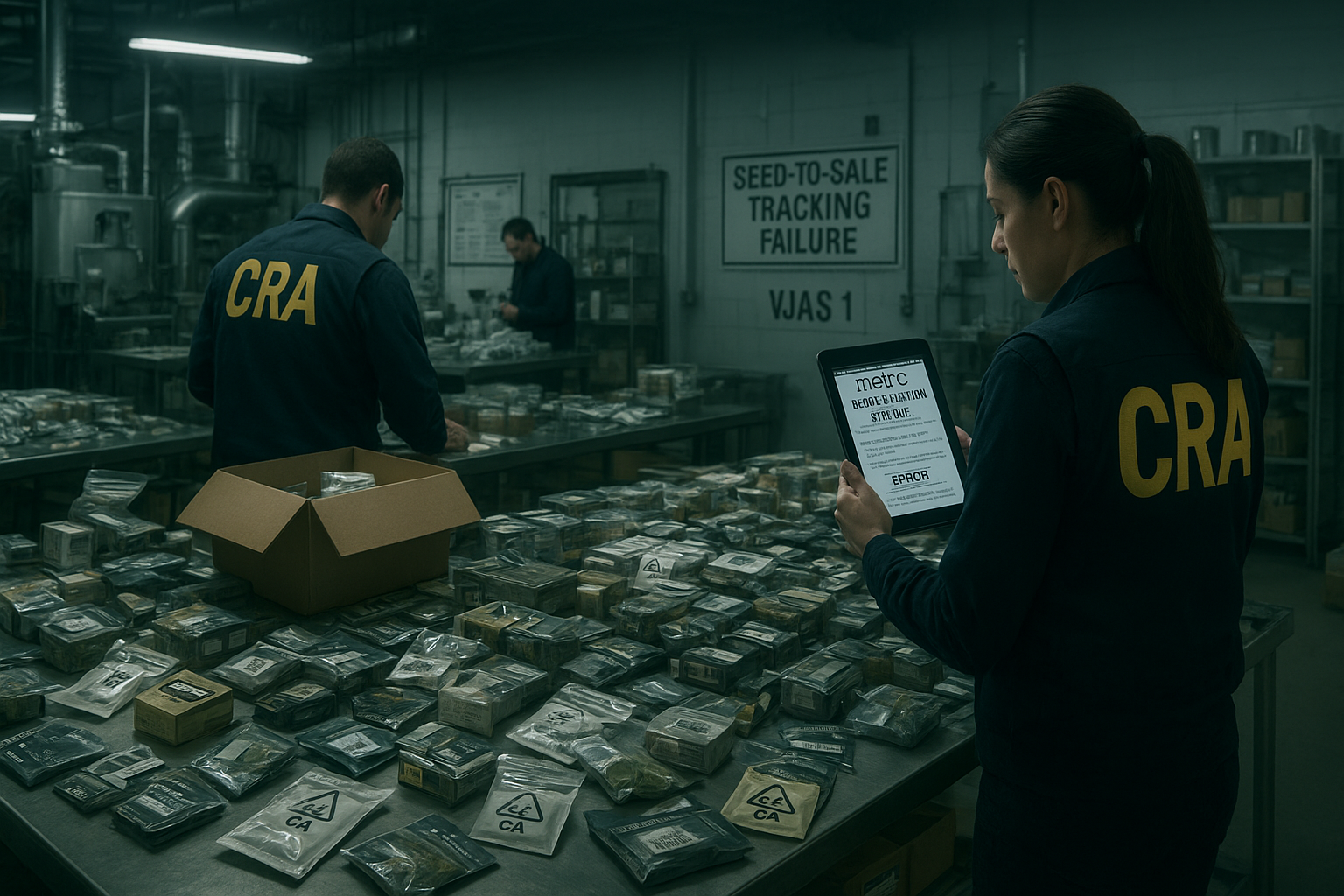
Michigan's Cannabis Regulatory Agency has filed a formal complaint against VJAS 1, a licensed cannabis processor based in Harrison Township, after inspectors found more than 12,000 individual cannabis products with no Metrc tags or other identifying information on site. Among those untagged products were items packaged in California-specific packaging - carrying the "CA" designation and California-mandated warning language - raising serious questions about where the inventory actually came from. The CRA is now pursuing fines and potential license suspension, revocation, restriction, or non-renewal.
The case is a stark reminder of what seed-to-sale tracking is actually designed to prevent. Metrc - Michigan's state-mandated cannabis traceability platform - assigns a unique tag to every plant and every product unit that moves through the licensed supply chain. When inventory exists without those tags, regulators have no way to verify its origin, its testing status, or whether it ever passed through a licensed facility at all. Operators in other regulated markets know this pressure well: providers of cannabis dispensary software arizona and comparable platforms elsewhere have built their systems specifically around the kind of real-time inventory reconciliation that makes ghost inventory - product that exists on a shelf but nowhere in the compliance record - operationally impossible to hide for long.
What makes the VJAS 1 situation particularly difficult to explain away is the California packaging. Out-of-state cannabis products entering Michigan's licensed market aren't just an administrative problem - they represent a fundamental breach of the closed-loop system that state regulators built the licensing framework around. Michigan, like every other adult-use state, operates a supply chain that is legally confined within its borders. Cannabis cultivated or processed in California cannot be lawfully transferred to a Michigan licensee. Full stop. The presence of California-labeled products inside a Michigan processing facility suggests either an intentional circumvention of that structure or a catastrophic breakdown in how the facility manages its inventory intake - neither of which reflects well on the licensee.
When the Tags Are There but the Story Still Doesn't Add Up
The inspection produced one more wrinkle. Some products at the VJAS 1 facility did carry valid Metrc tags - but when investigators cross-referenced those tags against the statewide system, the products were supposed to be located at other licensed cannabis businesses entirely. That's a separate category of compliance failure. It points not just to missing documentation but to potential misuse of legitimate tracking credentials - tags that may have been generated for one business's inventory and then physically attached to products at a different location. Regulators take that seriously. It suggests the traceability system itself was being worked around, not merely neglected.
Employees at the facility reportedly couldn't account for how or why so many untagged products were present. That's worth sitting with for a moment. A licensed processor is expected to maintain meticulous compliance logs, track every incoming and outgoing transfer on delivery manifests, and reconcile physical inventory against its Metrc record on an ongoing basis. "We don't know" is not an answer that works in a regulated environment where the entire licensing model is premised on knowing - at every point - exactly what product exists, where it came from, and where it's going.
What Other Operators Should Take From This
For licensed processors, retailers, and vertically integrated operators watching this case, the operational lesson is straightforward: internal inventory audits are not optional housekeeping. They are the first line of defense against exactly this kind of enforcement exposure. A facility with thousands of untagged SKUs doesn't arrive at that situation overnight. It accumulates - through sloppy intake procedures, inadequate staff training, or deliberate decisions to accept product outside the compliant transfer process. Any one of those pathways ends at a CRA complaint.
The compliance infrastructure matters here too. Operators relying on point-of-sale systems or inventory platforms that aren't deeply integrated with Metrc - or that allow product to be received without an immediate tag reconciliation - are carrying operational risk they may not fully recognize. The technology exists to flag untagged inventory at intake. Using it consistently is the difference between catching a problem internally and having a state investigator catch it for you.
VJAS 1 now faces a range of potential consequences: fines, license restrictions, suspension, revocation, or refusal to renew. Michigan's CRA has shown it will pursue enforcement when inspections turn up material compliance failures - and a finding of 12,000-plus untagged products, some bearing out-of-state packaging, sits well above the threshold of a minor record-keeping lapse. The outcome of this case will be worth watching, both for what it signals about Michigan's enforcement posture and for what it confirms about the operational standards regulators expect licensed processors to maintain.