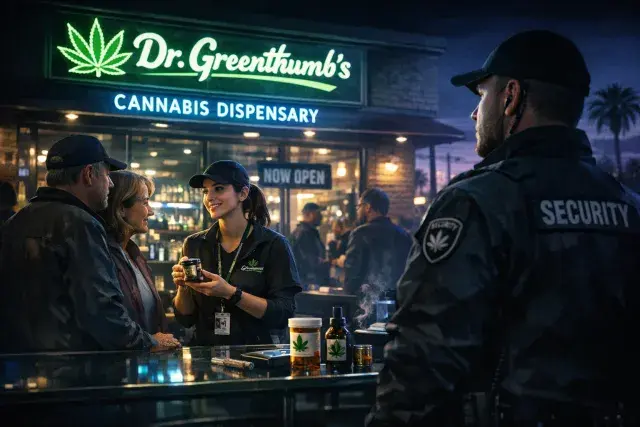
A second cannabis dispensary arrives in the Santa Maria Valley this Saturday with the opening of Dr. Greenthumb's at 1604 East Clark Ave, Suite 101, in Orcutt. This expansion marks a step forward in local access to regulated cannabis products amid California's ongoing normalization of marijuana retail. Residents gain another option for legal purchases, reflecting broader shifts in community attitudes and state policy.
Local Expansion Builds on California's Cannabis Framework
California legalized recreational cannabis sales in 2018 through Proposition 64, which voters approved two years earlier. That measure allowed licensed retailers to operate statewide, subject to strict regulations on testing, taxation, and zoning. In the Santa Maria Valley, a rural area in Santa Barbara County, the first dispensary paved the way for Dr. Greenthumb's arrival, signaling growing acceptance in communities once wary of marijuana businesses. Local governments enforce buffer zones and land-use rules to balance economic benefits with public concerns.
Regulated Retail Addresses Safety and Access
Dispensaries like Dr. Greenthumb's sell products tested for contaminants such as pesticides and mold, a requirement absent from illicit markets. State licenses ensure age verification and secure storage, reducing risks associated with unregulated sources. For consumers in Orcutt, this opening provides convenient access without long drives to larger cities, while tax revenues support local services like schools and roads. Operators must track inventory to prevent diversion, maintaining compliance with California's Bureau of Cannabis Control.
Implications for Community and Economy
The addition of a second outlet suggests demand exceeds the capacity of the existing store, potentially drawing jobs and investment to Orcutt. Cannabis retail contributes to California's economy, with licensed businesses generating hundreds of millions in taxes annually through cultivation, excise, and sales levies. Yet challenges persist: some residents voice concerns over traffic, odors, or youth exposure, prompting ongoing debates about placement and enforcement. As more dispensaries open, the valley positions itself within a maturing industry that emphasizes responsibility over prohibition.