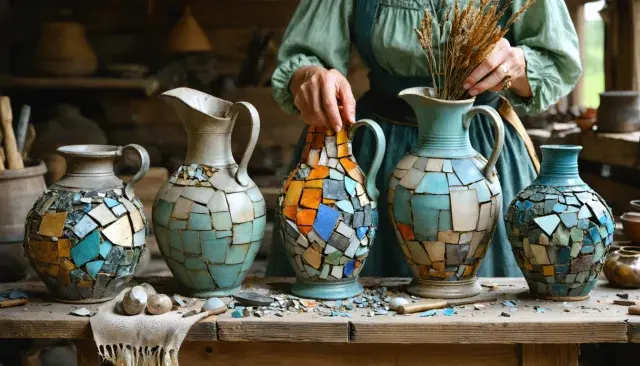
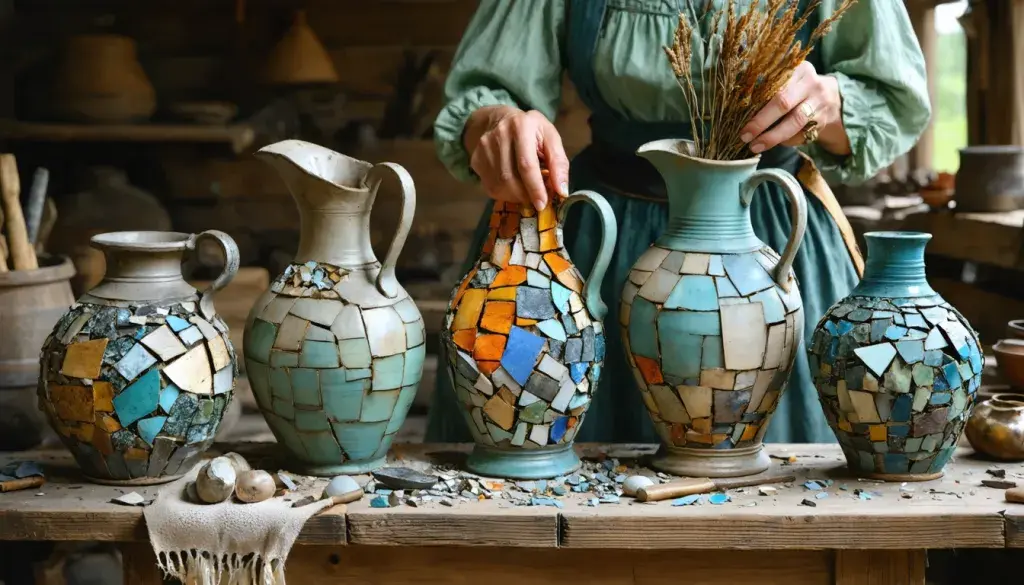
In the late 1800s, Arabella Walker, a farmwoman in South Carolina, fashioned five remarkable jars and pitchers known as memory jugs by pressing broken china shards into gray creek-bottom clay. These folk art treasures, blending utility with personal storytelling, illuminate Victorian-era crafting traditions and endure as cultural icons today.
Origins and Craft of Memory Jugs
Memory jugs emerged in the late 19th century across the South, evolving from African American grave decorations to cherished home ornaments. Instructions appeared in Godey's Lady's Book during the 1870s-1890s, aligning with Victorian obsessions for scrapbooks and collections. Women, gaining leisure from household innovations, channeled creativity into these vessels, embedding shards, coins, toys, and tokens into soft clay or putty to evoke memories of loved ones.
- Typical embeds: Broken ceramics, dolls, nuts, bolts, even screen door springs reflecting makers' lives.
- Dating clues: Coins or tokens, like a 1887 engraving or 1922 bus token, pinpoint creation eras.
- Impermanence adds charm: Many items fall off, leaving intriguing imprints of lost horses or prizes.
Arabella Walker's Enduring Legacy
Walker sourced clay from her farm's creek and scavenged discarded china behind her house, creating jars and a unique vase with a glass-backed hanging hole. A descendant recreated the process using farm-found arrowheads and Native American pottery, honoring this hands-on heritage. South Carolina historian Dr. Rodger Stroup notes their scarcity, with survivors often dismissed as "trash" by unaware auctioneers—like one in 1980s Newberry who undervalued the "conglomeration" obscuring fine stoneware.
Cultural Impact and Modern Revival
Peaking amid late-1800s Southern folk art, memory jugs spread beyond the Deep South, appearing in Baltimore with fire badges. Exhibits at South Carolina State Museum and Diggs Gallery, plus folklorist John Michael Vlach's research, highlight their shift from funerary to domestic roles. Today, online tutorials fuel revivals, while collectors hunt eBay finds. These jugs connect to broader trends in memory-keeping—scrapbooking's digital heirs—and preserve untold personal histories, urging us to value everyday creativity amid cultural ephemera.