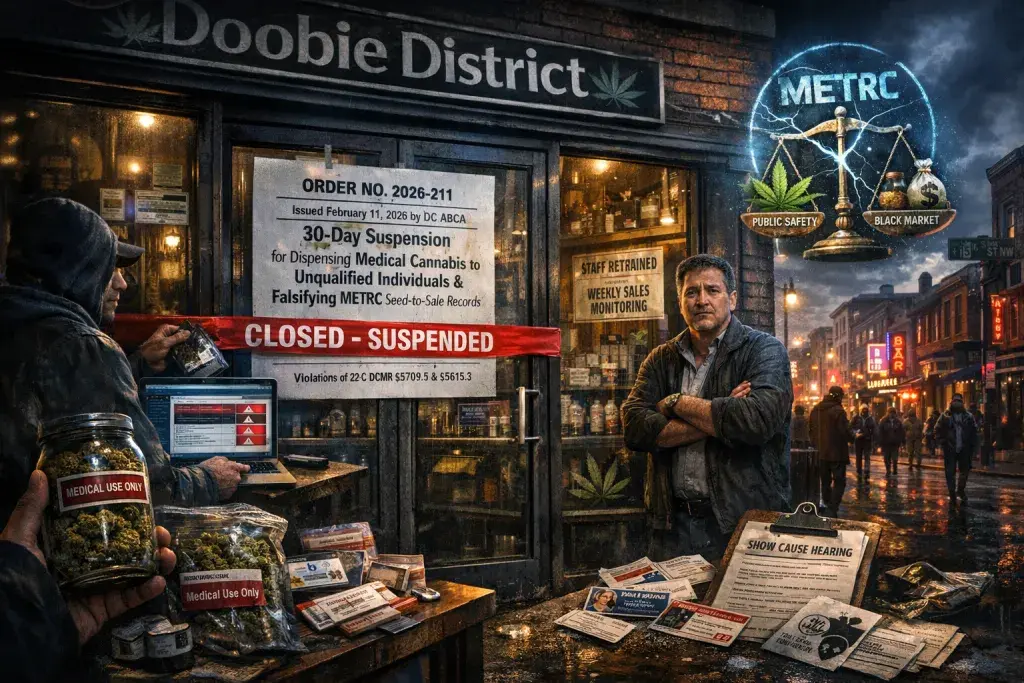
The District of Columbia Alcoholic Beverage and Cannabis Board has imposed a 30-day suspension on KLM, LLC, operating as Doobie District at 1526 U Street NW, for dispensing medical cannabis to unqualified individuals and entering false data into the state's METRC seed-to-sale tracking system. Issued February 11, 2026, in Order No. 2026-211, the decision highlights the critical need for rigorous compliance to safeguard patient access and public safety in DC's regulated medical cannabis program.
Key Violations Uncovered in Investigation
An ABCA investigation launched May 9, 2025, followed tips about unauthorized sales. Undercover agents made controlled purchases of confirmed medical cannabis without showing patient cards or caregiver credentials. Labels on the products bore a Doobie District employee's name and ID, not the buyers'.
- Dispensing to non-qualified patients or caregivers, violating 22-C DCMR § 5709.5.
- Falsifying METRC entries, breaching 22-C DCMR § 5615.3, which mandates accurate, real-time tracking.
Further scrutiny revealed the employee's account exceeded the 8-ounce, 30-day patient limit, with two other accounts oversold using the same credentials, pointing to systemic lapses in verification and record-keeping.
Response and Remedial Actions
Doobie District owner Peter Murillo admitted the facts at a show cause hearing, attributing issues to rogue staff. The company fired implicated employees, retrained others, and introduced weekly sales monitoring by ownership. Despite these steps, the Board stressed licensee accountability for supervision, opting against revocation but mandating ABCA-approved training within 60 days.
Broader Implications for Medical Cannabis Oversight
DC's medical cannabis framework, established to serve registered patients with conditions like chronic pain or PTSD, relies on METRC to prevent diversion to recreational black markets—where products often lack safety testing. Such violations erode trust, risk patient health through unverified access, and strain regulatory resources. With DC's program mirroring trends in states like Maryland and Virginia, this case signals heightened scrutiny amid growing demand; dispensaries ignoring protocols invite stricter penalties, pushing the industry toward robust tech-driven compliance to balance access with safety.