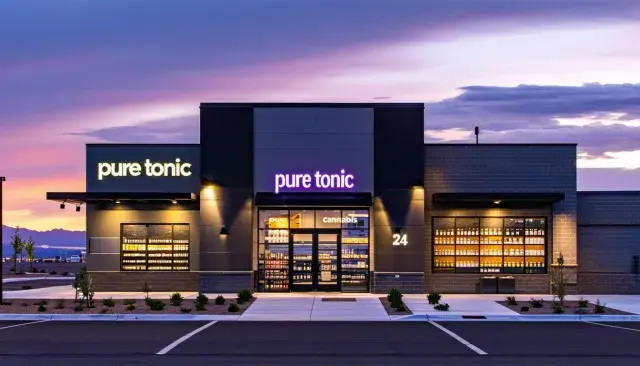
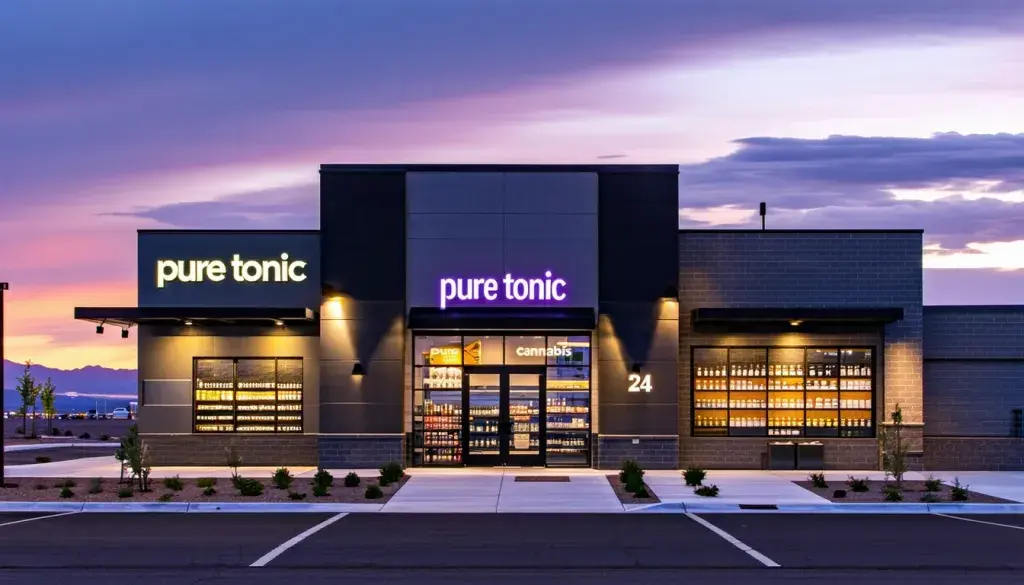
A cannabis dispensary has quietly taken root at one of Nevada's most unlikely retail addresses. Pure Tonic has opened at the Tahoe Reno Industrial Center - the vast industrial park along USA Parkway that houses gigafactories and distribution hubs, not storefronts - making it the first cannabis facility in Storey County and, according to Pure Tonic President Jacob Ward, the first 24-hour dispensary in northern Nevada. The timing and location are deliberate: this is a dispensary built around shift workers, not browsers.
Built for the Clock-Puncher, Not the Connoisseur
The TRI Center, as it's commonly known, employs tens of thousands of workers across manufacturing, logistics, and tech operations. Ward designed Pure Tonic around that reality. Quick ordering, discreet transactions, fast fulfillment - the operational model reads less like a traditional dispensary experience and more like a well-run pharmacy window.
"They're on the move," Ward said of his current customer base. "They're ready to get home, typically, or they're on their way to work and need to get there at a certain time." That context matters. Nevada has permitted recreational cannabis since 2017, and dispensaries in the Reno metro area have largely refined a retail format aimed at walk-in traffic with time to browse. Pure Tonic is betting there's a separate, underserved market - one that wants the product without the experience of buying it.
The 24-hour model is worth pausing on. Most Nevada dispensaries operate within conventional retail hours. The TRI Center runs around the clock; its workforce does too. Matching dispensary hours to industrial shift schedules isn't a small operational choice - it's a structural acknowledgment that cannabis consumers don't fit a single profile, and that access, not just availability, shapes who actually uses legal cannabis versus who turns to unregulated alternatives.
Nevada-Grown, and Intentionally So
Pure Tonic is partnering with MMG Agriculture, a locally owned cannabis cultivator whose new product line, Comstock Cannabis, is positioned as a distinctly Nevada brand. Sarah Rosenfeld, CEO of MMG Agriculture, was direct about her reasoning. The cannabis market has consolidated substantially in recent years, with multistate operators and nationally distributed brands dominating shelf space in dispensaries across legal states. The thing is, that consolidation tends to flatten regional identity - the same product, same packaging, available from Portland to Phoenix.
Rosenfeld wants something different. "This cannabis industry has gotten very corporate," she said, "and there's a lot of brands that are now really nationwide." Comstock Cannabis is pitched as the counterpoint: grown in Nevada, sold in Nevada, carrying some of the specificity of place that a national brand structurally cannot offer. Whether that resonates commercially remains to be seen, but the instinct tracks with broader consumer trends favoring provenance and local supply chains - in food, in wine, increasingly in cannabis.
Three Nations Cannabis, a tribal-owned brand also emphasizing Nevada-grown products, is expanding in the region simultaneously, with dispensaries on South Virginia Street, in Verdi, and a location slated for Spanish Springs. The parallel growth of locally rooted brands isn't coincidental; it reflects a maturing market where differentiation increasingly requires a story, not just a product.
Six Years from License to Opening - and What That Says About Nevada's Regulatory Path
Ward received his Storey County cannabis license in 2018. Pure Tonic just opened. That six-year gap between award and operation isn't unusual in the cannabis industry, but it's worth understanding why. Cannabis licensing in Nevada - as in most legal states - involves layered regulatory review at state and county levels, zoning approvals, facility buildout to compliance standards, and, often, the quiet friction of being a new industry working through jurisdictions with limited regulatory precedent. Storey County, primarily an industrial and rural county, had no existing framework for cannabis retail. Building that framework takes time, regardless of political will.
The wait, apparently, has been worth it. "It's gone really well," Ward said. Simple sentence; meaningful signal. Dispensaries in outlying or non-traditional locations carry real commercial risk - the question of whether workers 25 minutes from Reno will stop rather than wait until they're closer to home is a genuine one. Early results, at least by Ward's account, suggest the answer is yes.
Whether Pure Tonic's model influences how other operators think about industrial-corridor retail is an open question. Nevada's cannabis market is competitive and geographically concentrated in the Las Vegas and Reno metros. A 24-hour dispensary anchored to a specific workforce, partnered with local cultivators, operating in a county where it's the only show in town - that's a narrow but potentially durable position. Not every market has a TRI Center. But a lot of markets have shift workers, and until now, almost none of their dispensaries have been designed with that in mind.