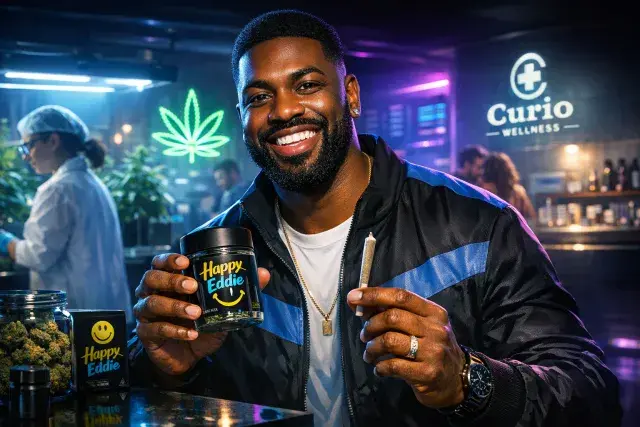

A moment of ordinary politeness - a smile at a castmate during a reality TV event - became, somewhat absurdly, the origin story of a cannabis company. Eddie Osefo, attorney and husband of Real Housewives of Potomac star Wendy Osefo, has launched Happy Eddie, a flower and pre-roll brand in partnership with Maryland-based Curio Wellness, timed to the show's eighth season premiere this Sunday. The brand's name is a direct callback to the "Happy Eddie" nickname his co-stars coined after that much-discussed smile went viral - proof, if any were needed, that in the attention economy, even minor scandals can become viable IP.
A Legal Market, a Rare Opportunity
Maryland legalized adult-use cannabis in 2022, opening one of the more closely watched regulated markets on the East Coast. For Osefo, who describes himself as a social cannabis user since his sophomore year at the University of Maryland, College Park, the timing was deliberate. Entering an emerging regulated market early - before it matures and consolidates around dominant players - is where real positioning happens. He understood, though, that licensing complexity in Maryland meant he couldn't simply hang out a shingle. He needed an established operational partner.
That's where Curio Wellness came in. A family-founded operation with women in senior leadership - including a father-daughter founding pair and a daughter serving as chief revenue officer - Curio fit the profile Osefo was looking for: locally rooted, compliance-fluent, and relationship-oriented. Happy Eddie products, currently two strains called Energized Eddie and Mellow Eddie, are available at Curio's Far & Dotter and Pharmkent dispensaries, as well as select locations across Maryland. A third strain is set to drop during the current television season - the "showstopper" Osefo is deliberately keeping close to his chest for now.
The Weight of Being Less Than Two Percent
Here's the thing: the cannabis industry's equity problem is structural, not incidental. Black entrepreneurs account for less than two percent of cannabis business ownership nationally, according to figures Osefo himself cited - a dispossession that runs in direct, ugly parallel to the decades in which Black and brown communities bore the sharpest edge of drug enforcement. The War on Drugs incarcerated generations of people for conduct that, in many states today, generates tax revenue and lifestyle branding. That contradiction doesn't resolve itself just because a market goes legal.
Osefo is clear-eyed about this. "I am breaking barriers for those to see and follow," he said, and he frames the Happy Eddie brand as a platform rather than just a product line - one he intends to use to bring other Black and brown entrepreneurs into the industry and to spotlight expungement and equity programs aimed at communities disproportionately targeted during prohibition enforcement. Whether that rhetoric translates into durable structural action remains to be seen. But the entry itself - a Black man with a licensed, legal cannabis business in a regulated adult-use state - is not nothing. Visibility inside a market is a different kind of standing than advocacy from outside it.
What the Brand Is Actually Selling
Beyond the cultural weight, Happy Eddie is, at its operational core, a flower-and-pre-roll play. That's the entry-level format for most state-licensed brands: lower capital intensity than manufacturing, faster path to shelf. The current SKUs - Energized Eddie and Mellow Eddie - follow the familiar sativa-adjacent/indica-adjacent logic that dispensaries use to help consumers self-sort. It's table stakes for the format, and Osefo isn't pretending otherwise. The real differentiator, at least in this early phase, is the brand story itself: recognizable name, reality-TV reach, and a genuine backstory that most cannabis startups can't manufacture.
Osefo has also signaled interest in expansion beyond Maryland - Missouri is the market he named specifically - which suggests the Happy Eddie build-out is meant to track regulatory openings state by state, the standard playbook for multi-state cannabis operators working within the federal patchwork that still governs the industry. Cannabis remains a Schedule I controlled substance under federal law, meaning interstate commerce is prohibited and banking access remains limited. Growth, for now, means replicating the Maryland model in other jurisdictions one license at a time.
A smile, a nickname, a brand. Stranger things have launched companies. What matters is what Osefo does with the foothold once the cameras stop rolling.