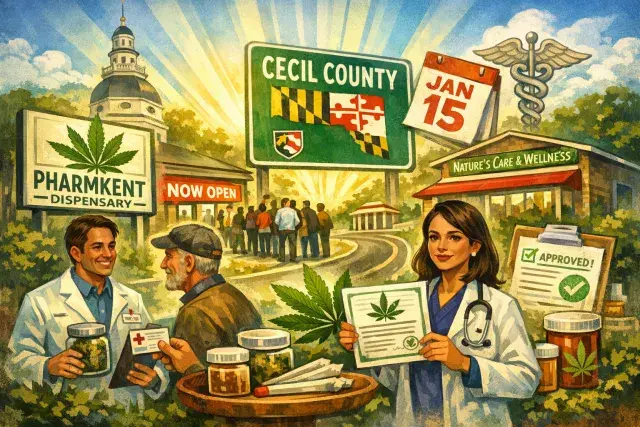
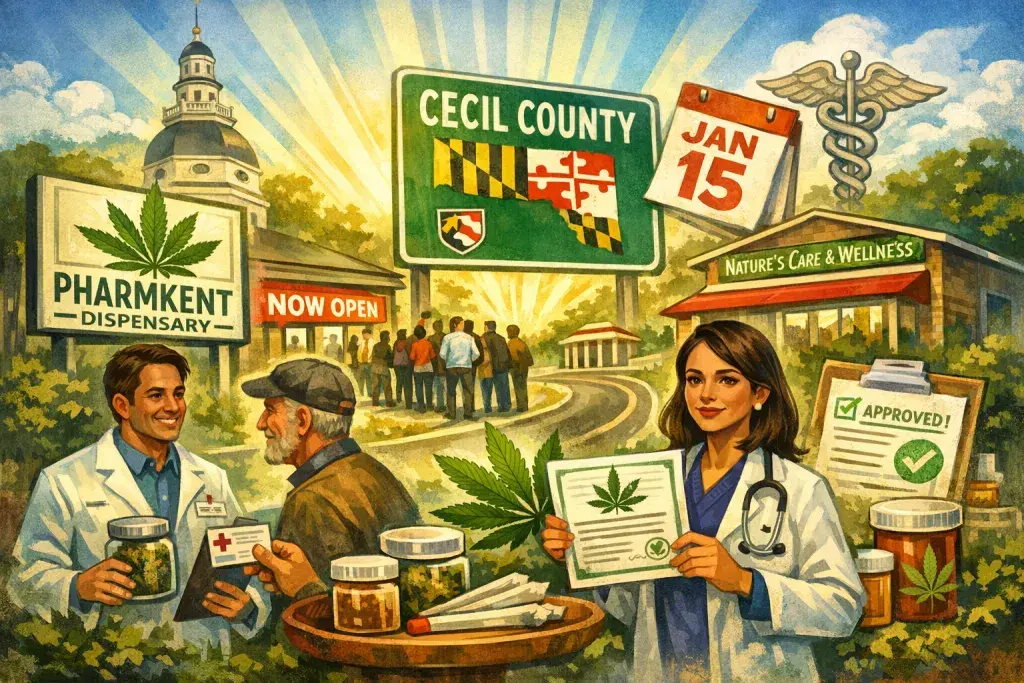
One of two medical marijuana dispensaries in Cecil County has opened its doors, with the second set to follow soon, marking the cautious expansion of Maryland's medical cannabis program across the state. PharmKent LLC at 330 E. Pulaski Highway in Elkton now accepts applications from patients with qualifying conditions, while Nature’s Care and Wellness in Perryville prepares for a January launch. This development signals a pivotal step in providing regulated access to cannabis for medical relief amid growing demand.
Navigating the Licensing and Application Process
Peter Murphy, managing member of PharmKent, confirmed the dispensary holds a preliminary license and processes applications for patients whose conditions qualify under state guidelines. Sales of approved cannabis products could start by late December or early January, pending final approvals. Across the county, Linda Condon, director of Nature’s Care and Wellness at 4925 Pulaski Highway, anticipates a full license soon, with the office fielding registration calls from January 2 and aiming for an opening on January 15.
Patients must obtain a state-issued certificate to purchase medical marijuana, a requirement that underscores Maryland's emphasis on medical necessity. This certificate verifies diagnoses like chronic pain, cancer, or epilepsy—conditions long recognized in medical literature for potential cannabis benefits. Dispensaries serve as gatekeepers, ensuring compliance with regulations designed to distinguish therapeutic use from recreational.
Historical Shift in Maryland's Cannabis Policy
Maryland legalized medical marijuana in 2014 through the Natalie M. LaPrade Medical Cannabis Commission, establishing a framework for cultivation, processing, and distribution. The program's slow rollout reflects deliberate safeguards: rigorous licensing, product testing for contaminants, and limits on possession to prevent diversion. Cecil County's dispensaries represent one phase in a statewide expansion that prioritizes patient safety over rapid deployment.
Early adopters like PharmKent build on years of advocacy from physicians and patients who cited cannabis's role in managing nausea, spasticity, and appetite loss. Unlike recreational markets in neighboring states, Maryland's model requires physician certification, fostering trust through medical oversight rather than open sales.
Implications for Patients and Public Health
For Cecil County residents, these openings mean local access to regulated products, reducing travel burdens and enabling timely treatment. Murphy and Condon's preparations highlight operational readiness, from application processing to product stocking, which could alleviate wait times seen in initial rollout states. Broader access may ease pressure on traditional pharmaceuticals for conditions responsive to cannabinoids.
Challenges persist: supply chain coordination and physician education on certification processes could delay full benefits. As more dispensaries activate, Maryland monitors outcomes to refine the program, balancing therapeutic promise with risks like dependency or impaired driving. This measured approach positions the state to adapt based on real-world data, informing national debates on medical cannabis efficacy.