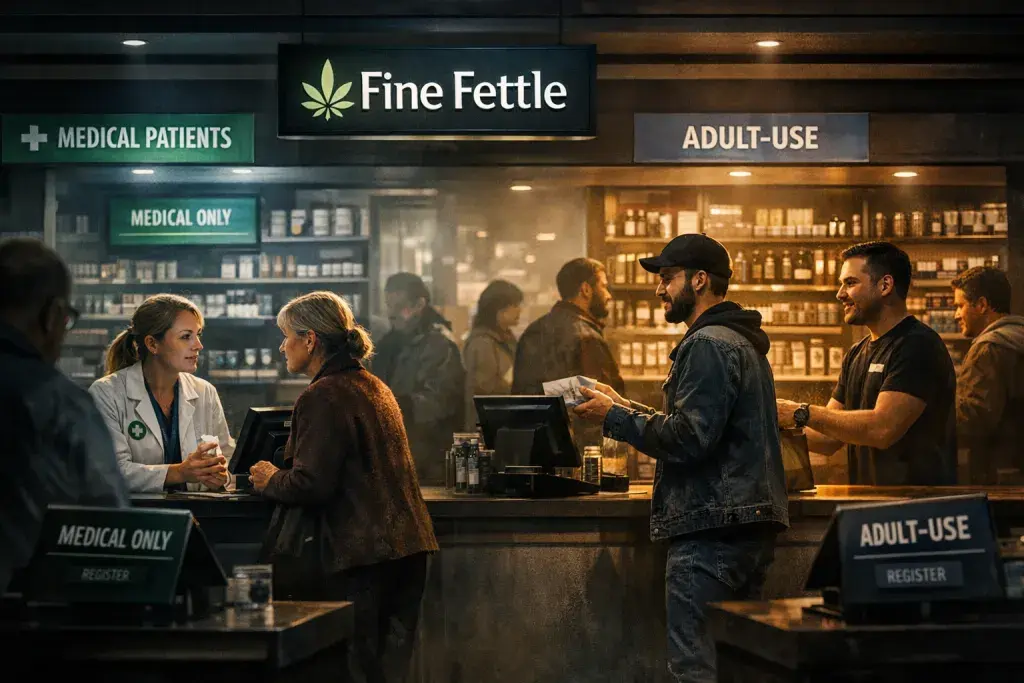
Fine Fettle has transformed its nine Connecticut cannabis dispensaries into hybrid operations, enabling each to accommodate both registered medical marijuana patients and adult-use buyers. This shift, completed under a state law change from last year, expands access to medical services in regions previously limited to recreational sales. Company leaders emphasize that the move bolsters Connecticut's medical program without compromising care quality.
Expanding Access Through Legal Reforms
Connecticut's Responsible Expansion of Existing Retailers and Cannabis Act (RERACA), passed last year, cleared the path for recreational dispensaries to adopt hybrid models starting October 1. The law also permits pharmacists to handle patient verification and consultations remotely, reducing the need for constant on-site presence. Fine Fettle seized this opportunity to convert five locations—Manchester, Norwalk, Old Saybrook, Waterbury, and West Hartford—that previously served only adult-use customers. The remaining sites in Newington, Bristol, Stamford, and Willimantic already operated as hybrids, so they face no disruptions.
Enhanced Services for Medical Patients
Medical patients now gain entry to stronger, medical-only products, tax exemptions, and discounted pricing at all nine sites. Fine Fettle has introduced dedicated medical registers and ensures pharmacist availability: at least eight contiguous hours on-site weekly per store, with remote access covering full operating hours, as required by law. Patients can seek consultations at registers or private spaces, addressing needs directly with licensed professionals. New medical patients qualify for promotional discounts on their first three purchases within a specified period, further easing entry.
Months of Preparation Meet State Standards
The conversion demanded six months of groundwork, including 15 state inspections, revised operating procedures, new technology installations, and staffing adjustments for pharmacist coverage. "This took much planning, including figuring out remote verification," said Benjamin Zachs, Fine Fettle's chief operating officer. While costs arose for buildouts and systems, executives view the investment as essential for equity. Patients in underserved areas no longer need long travels for specialized care, aligning with broader efforts to sustain medical cannabis programs amid recreational market growth.
Balancing Missions in a Evolving Market
Fine Fettle, which runs dispensaries in Connecticut, Massachusetts, and Georgia, positions this expansion as a commitment to "accessible, compassionate care." Zachs noted that hybrid operations serve both groups responsibly, preserving expertise and personal service. The change reflects Connecticut's push to integrate medical and adult-use sectors, ensuring patients retain advantages like lower costs and tailored products. As states refine cannabis frameworks, such adaptations signal a maturing industry focused on comprehensive access.